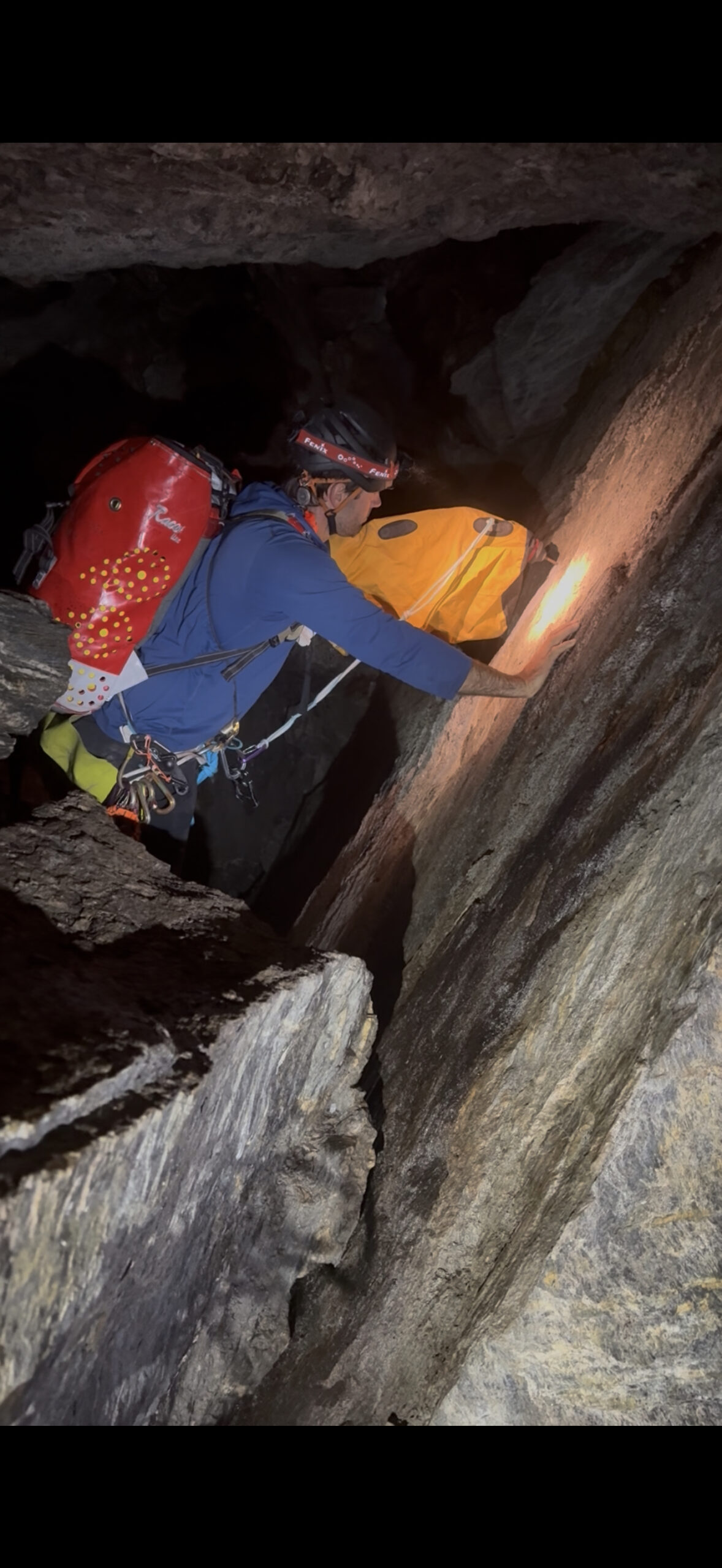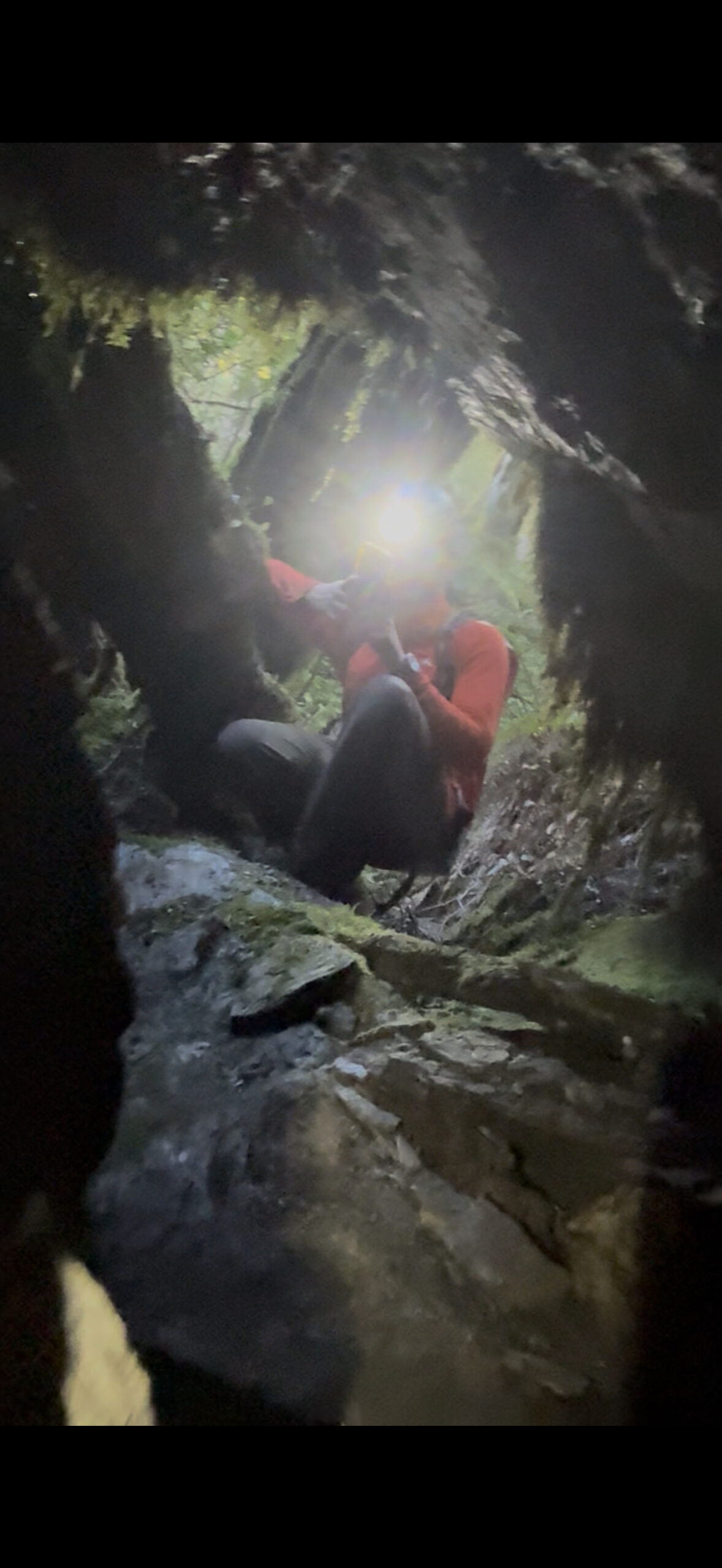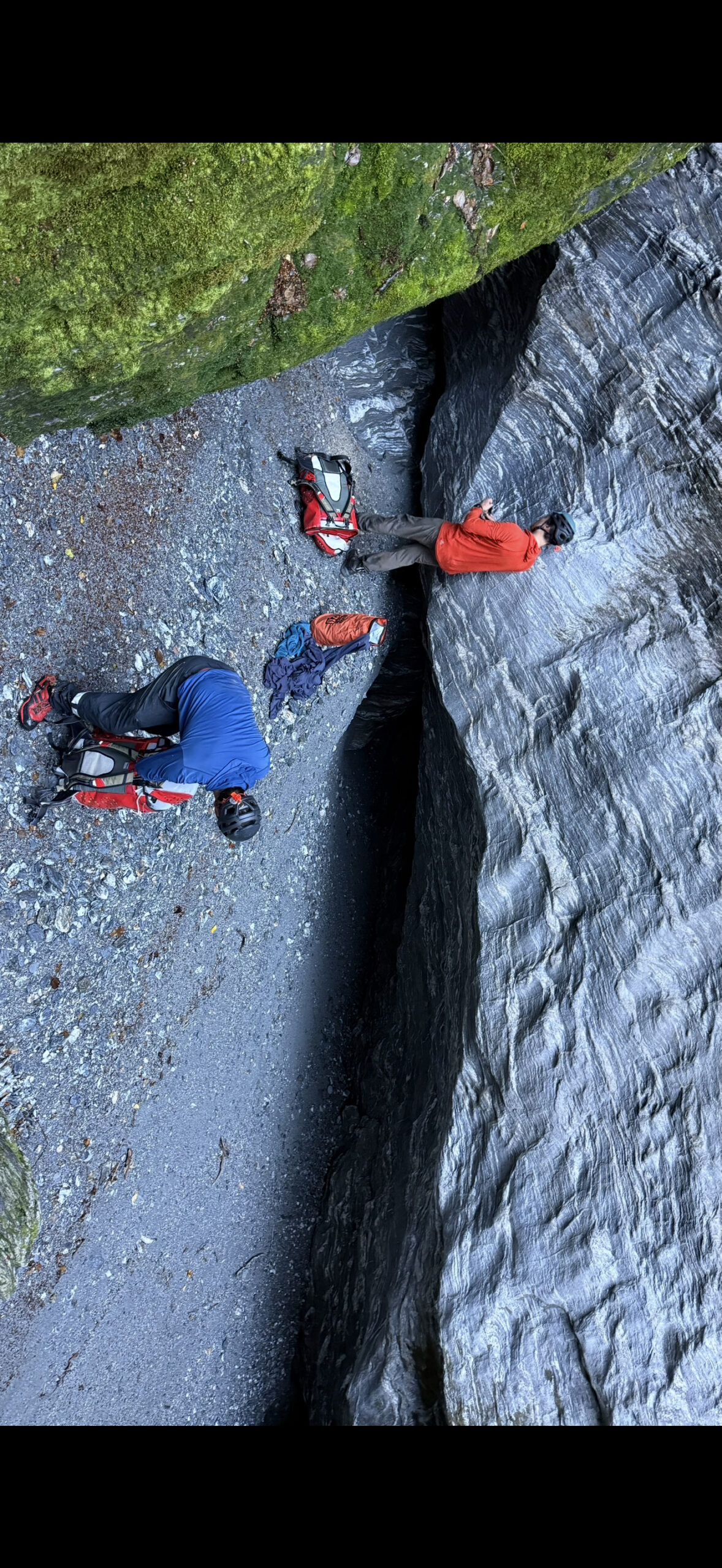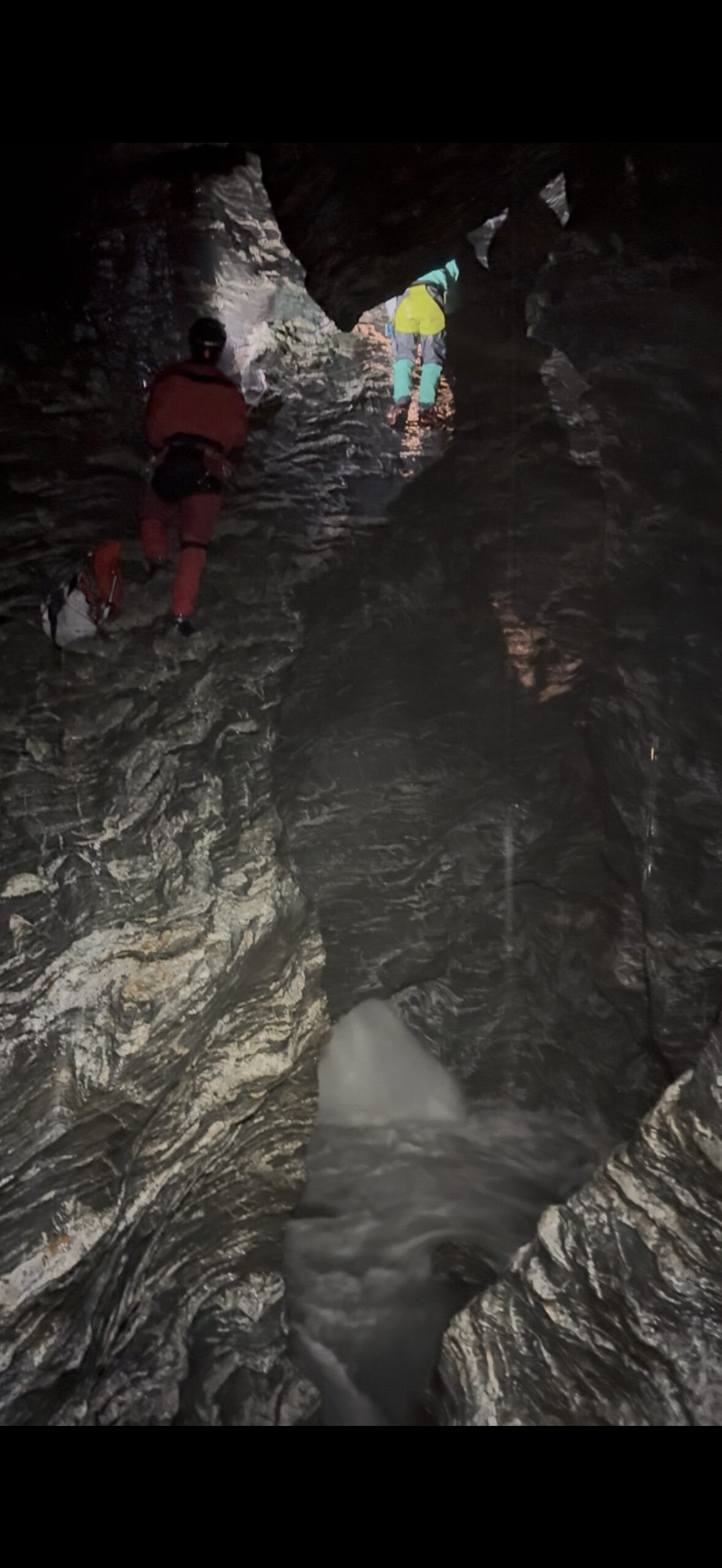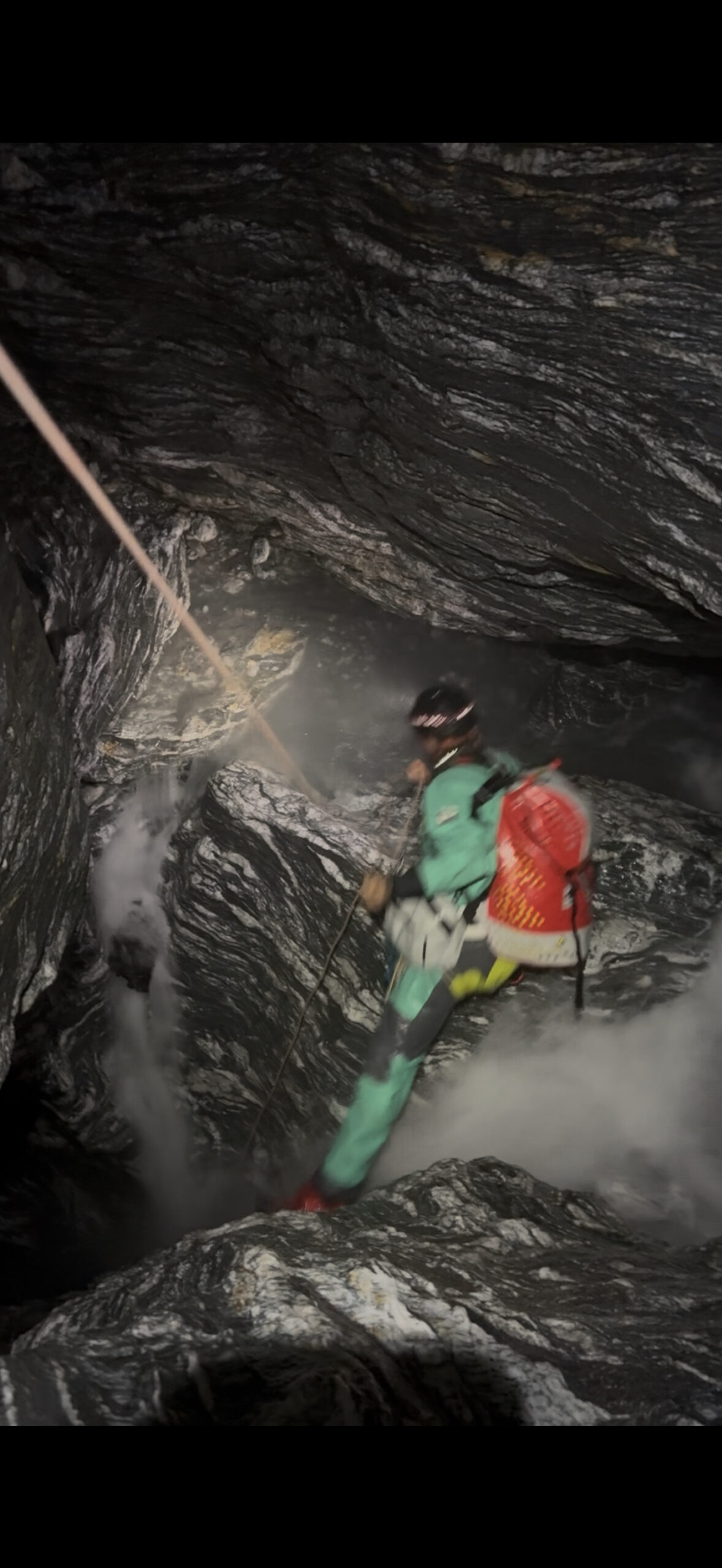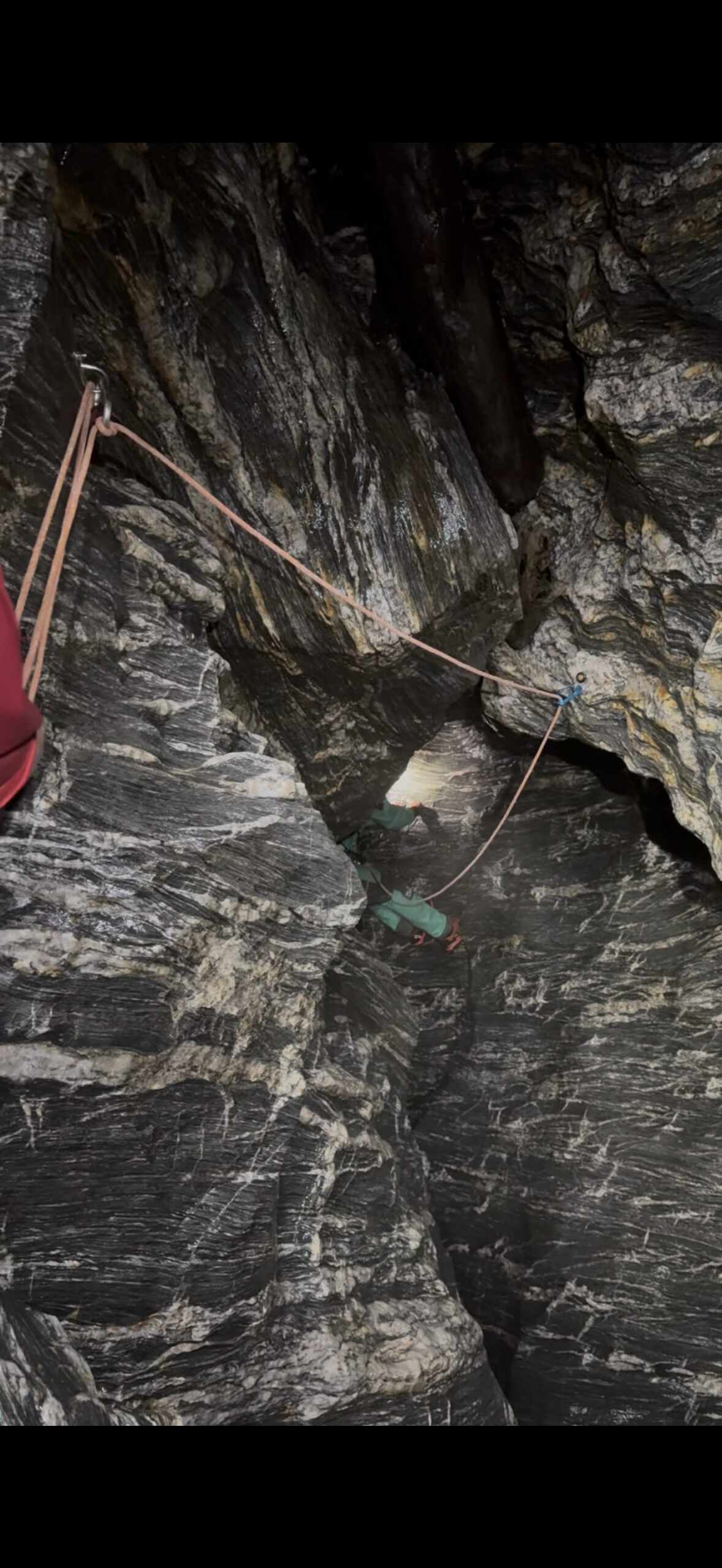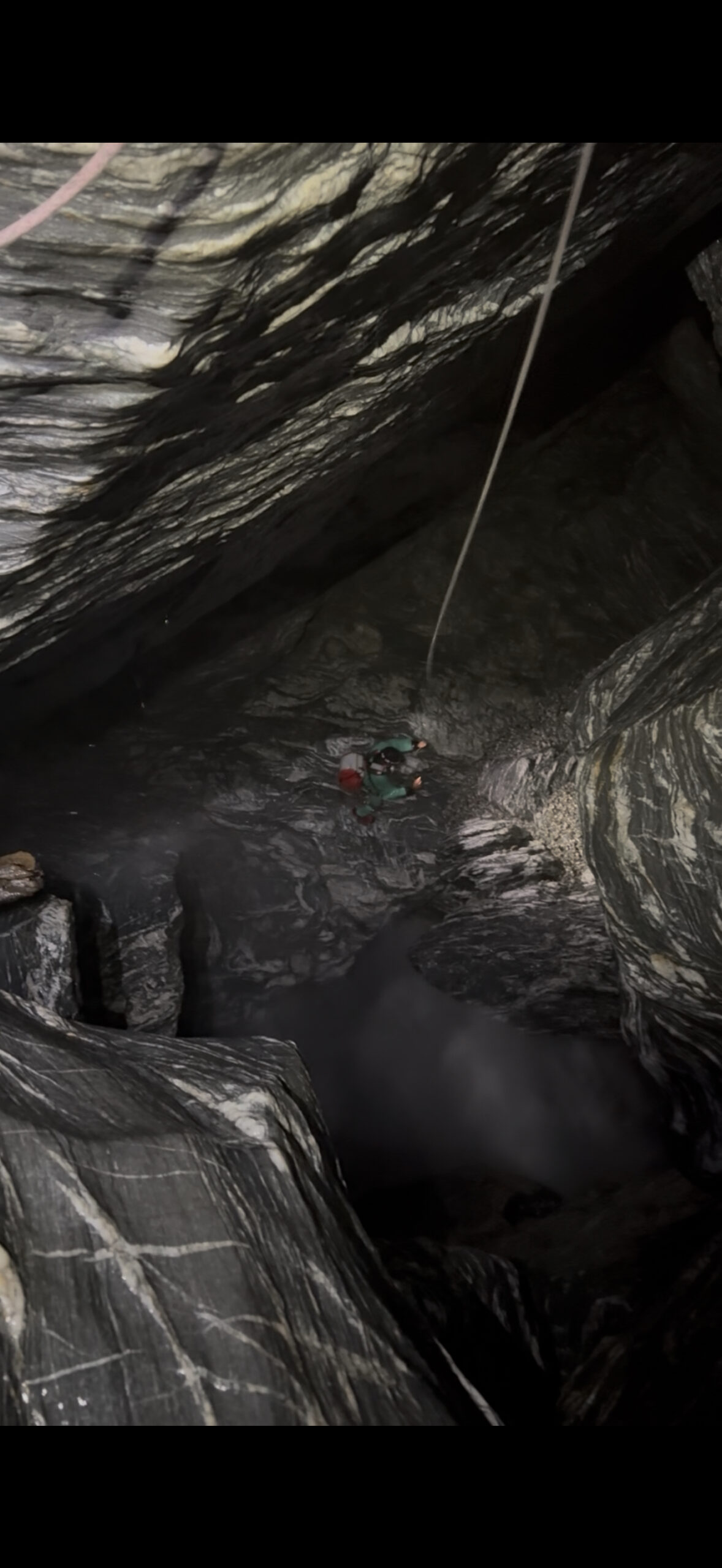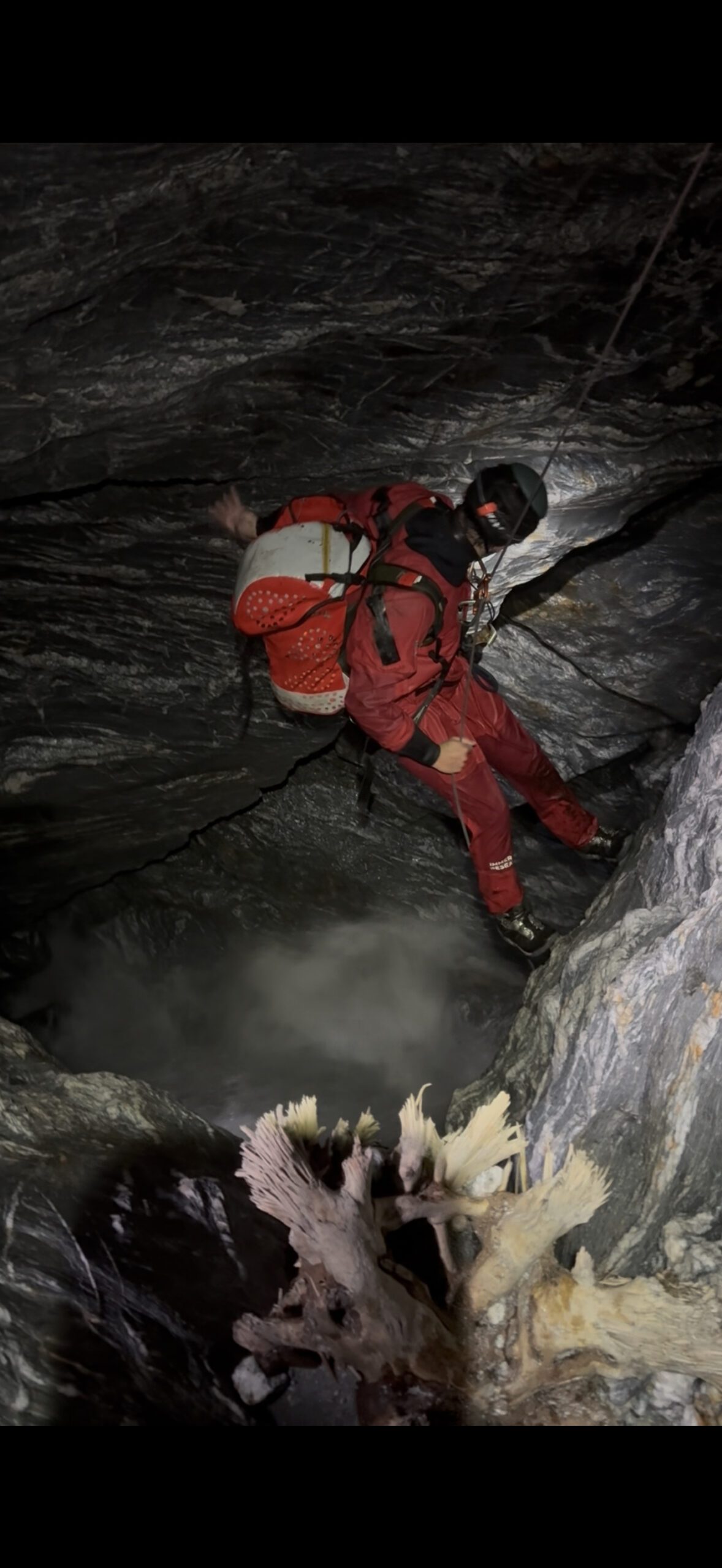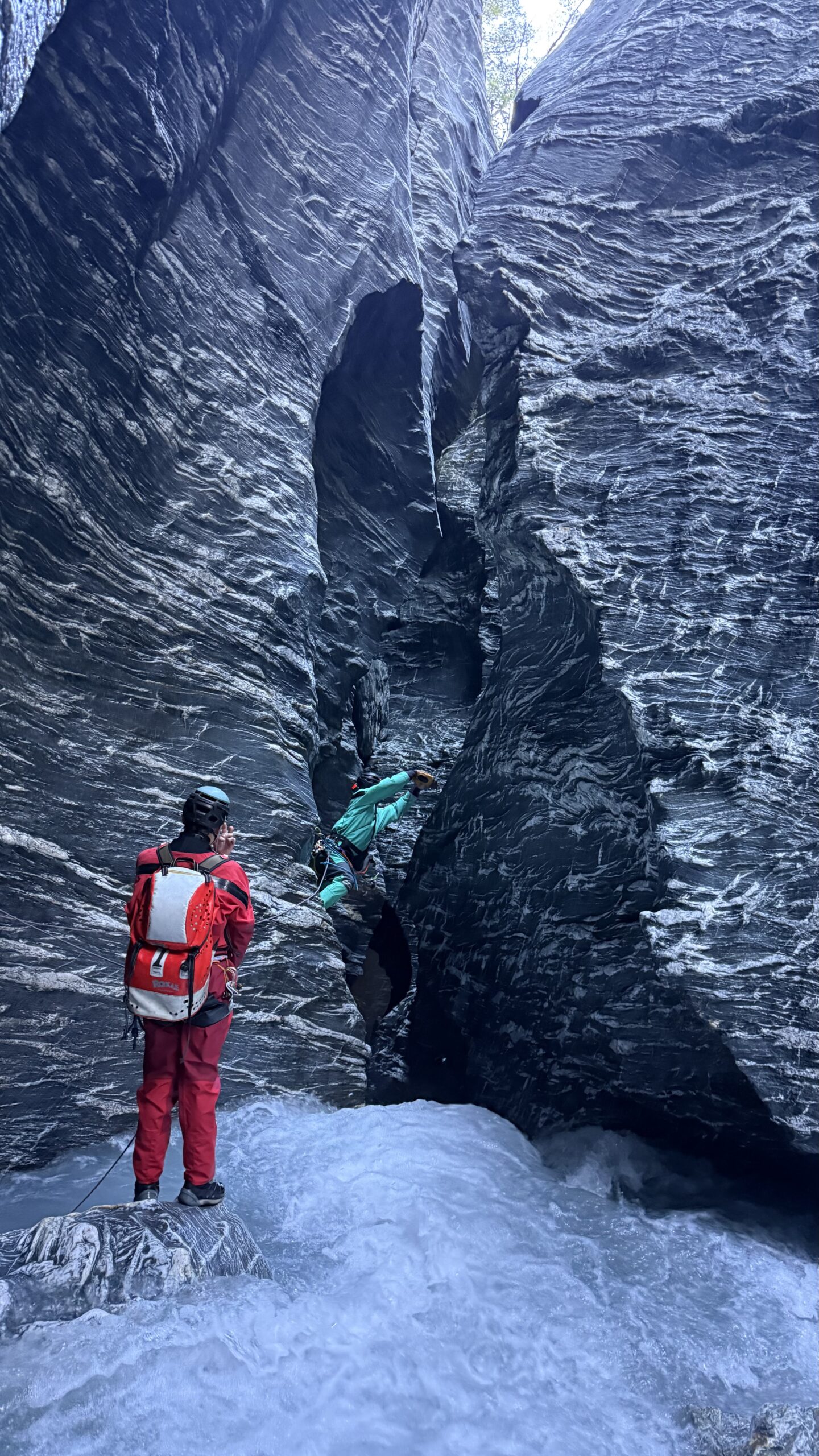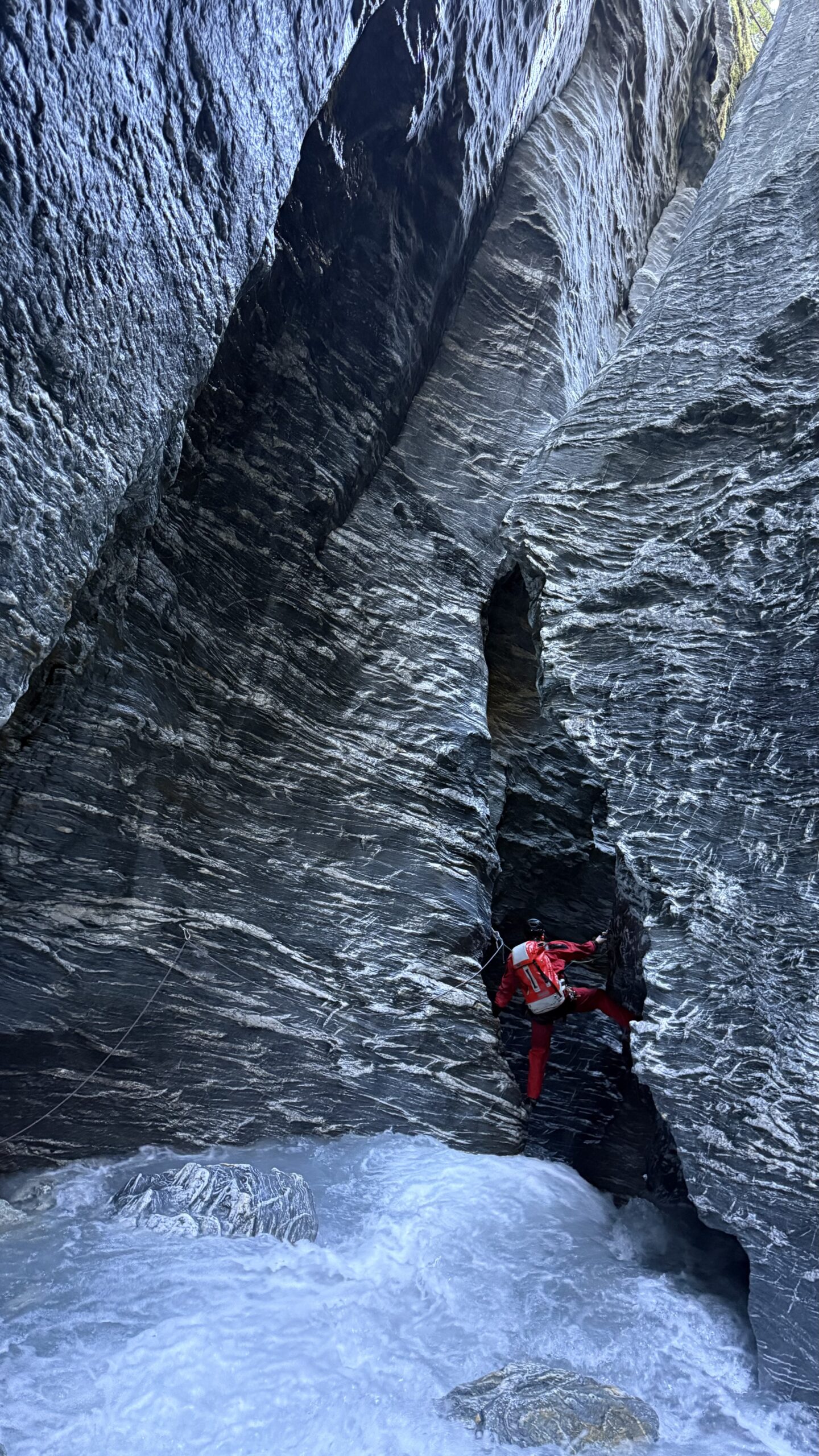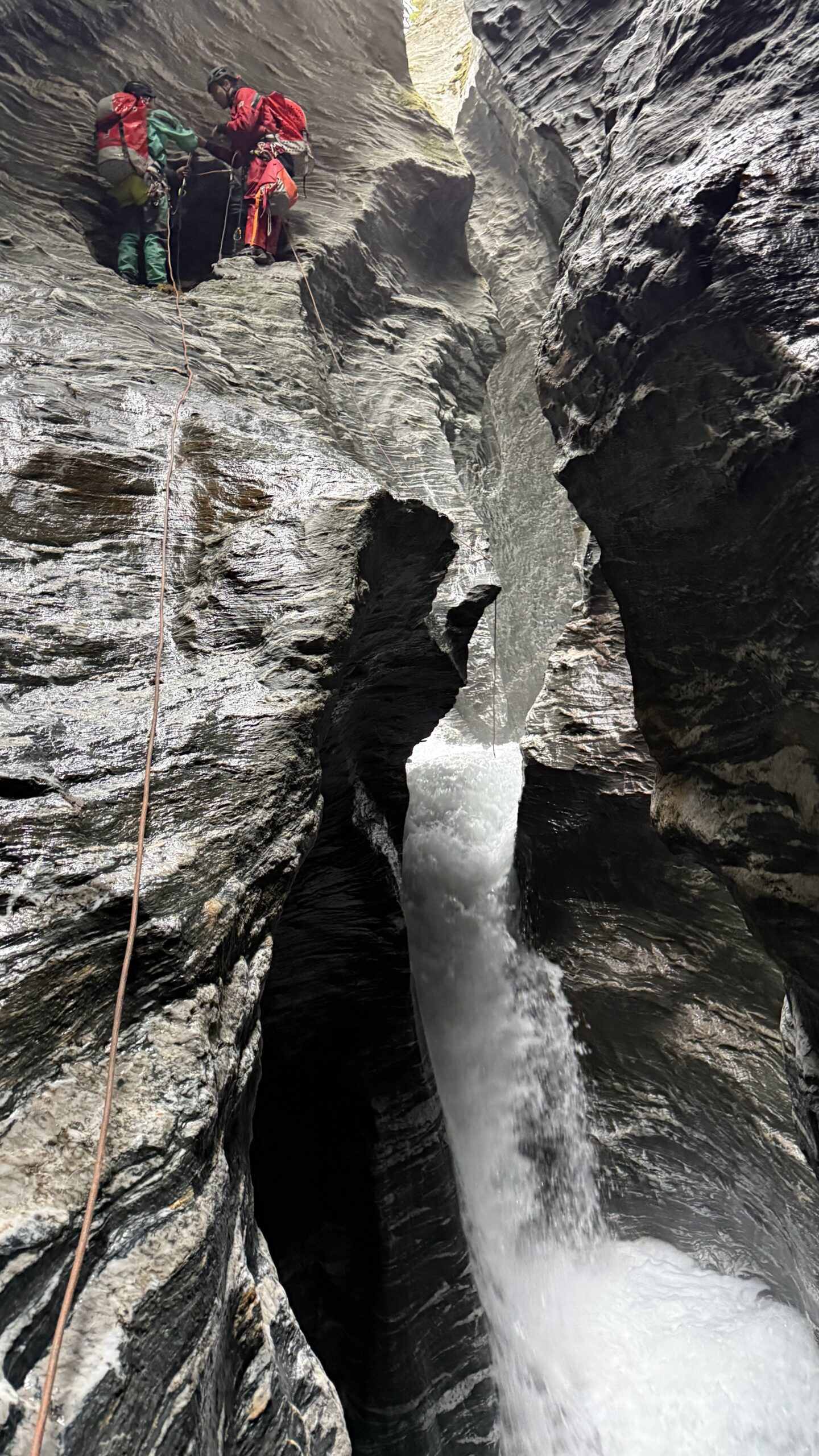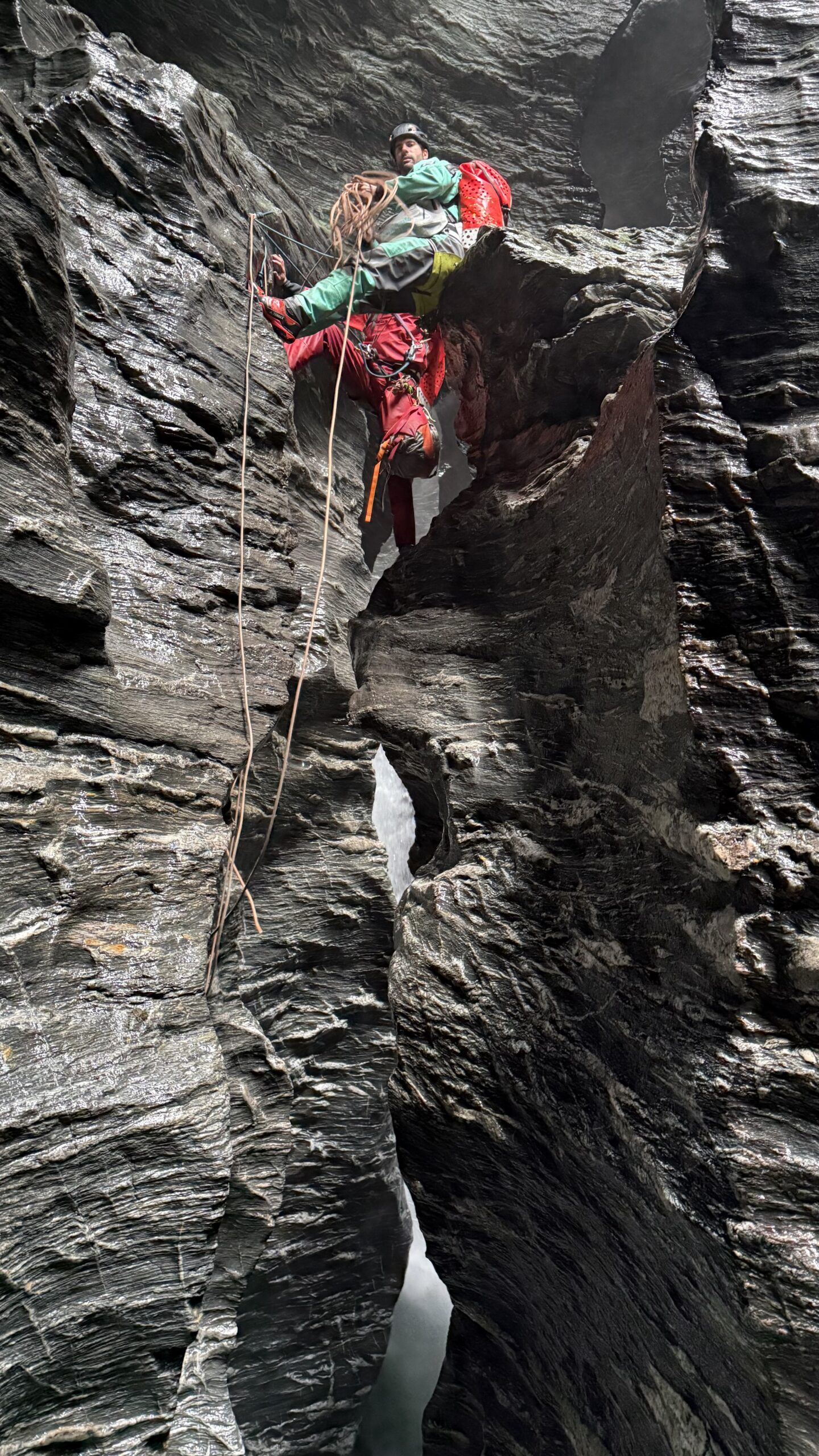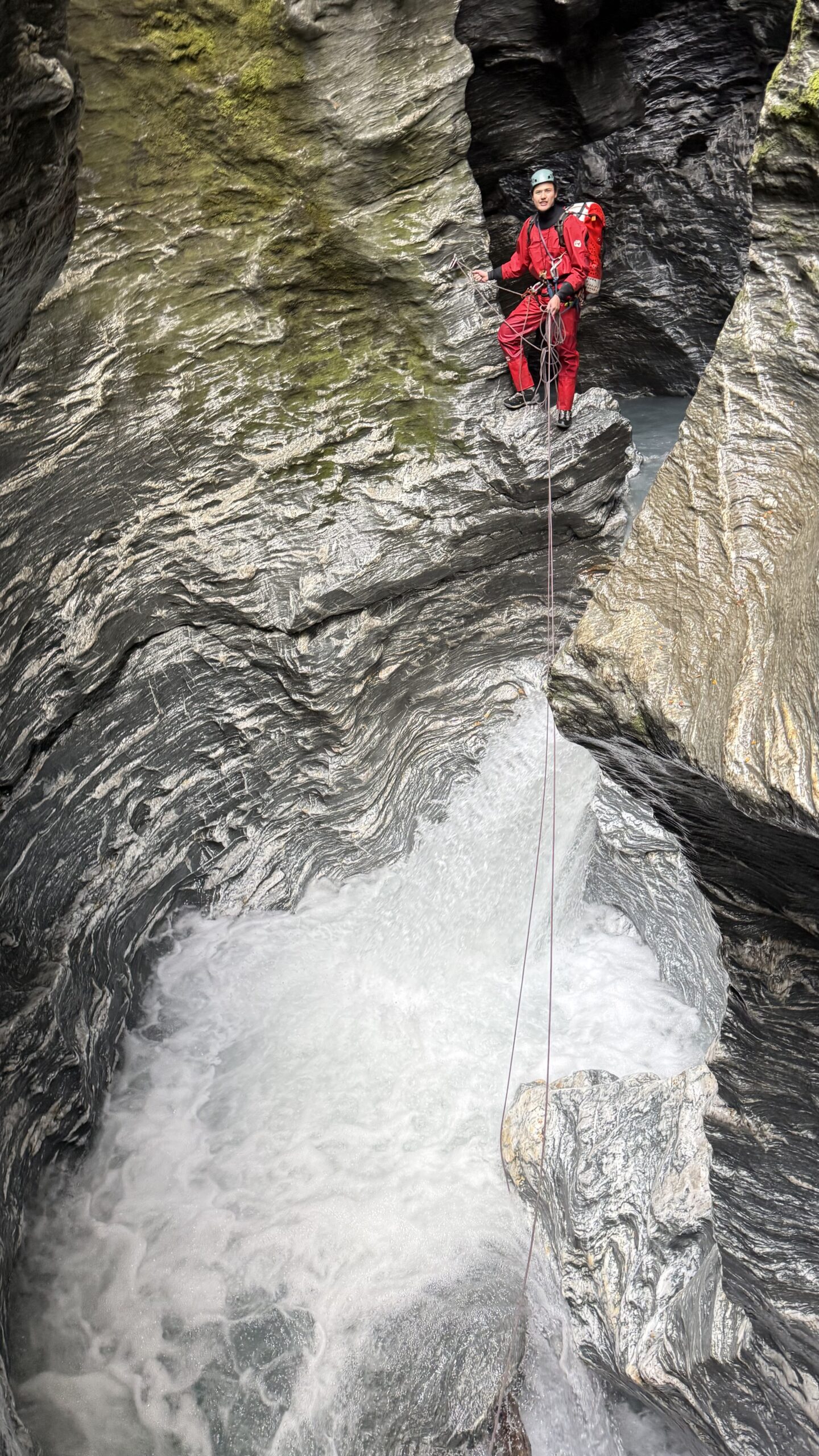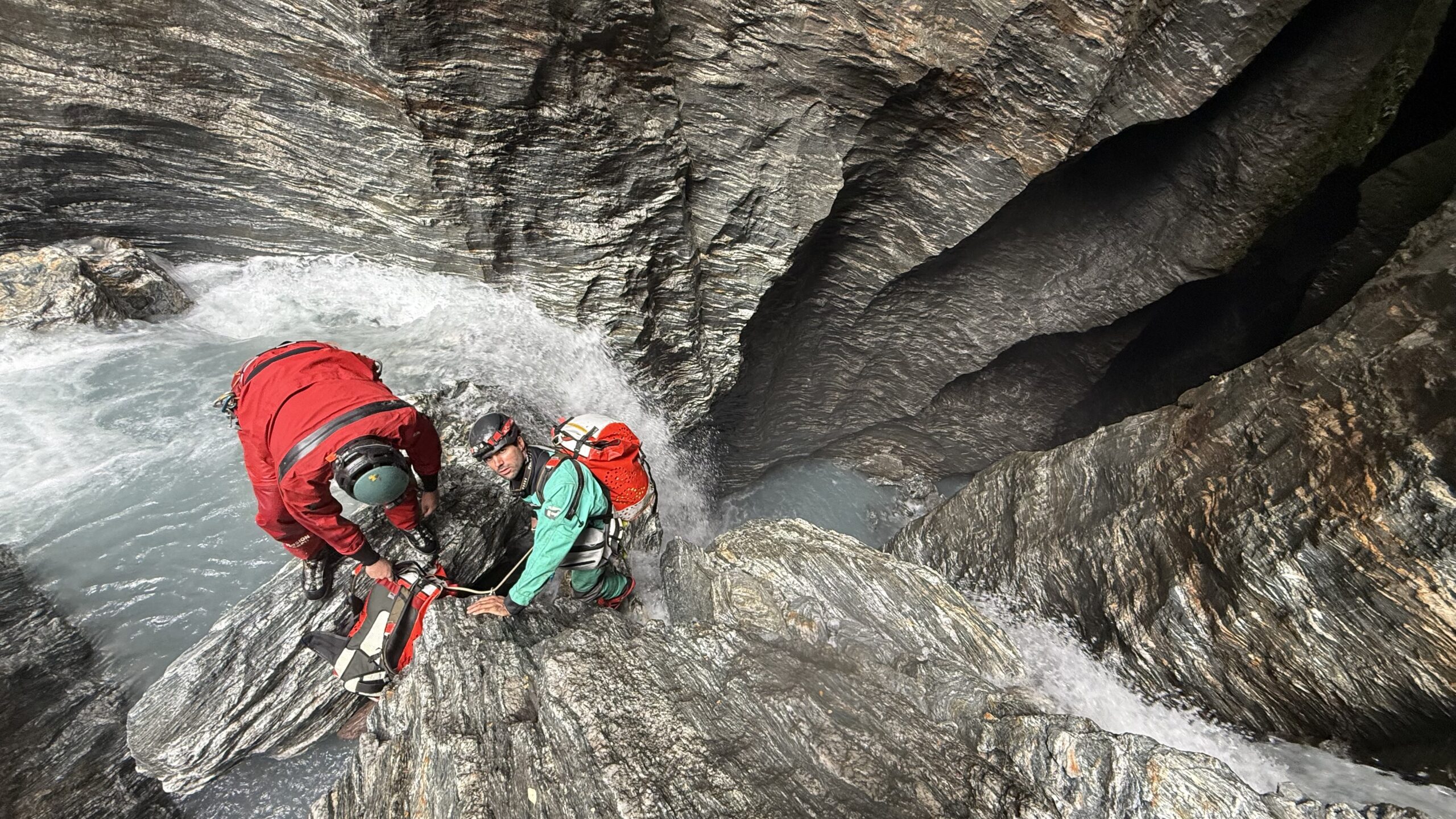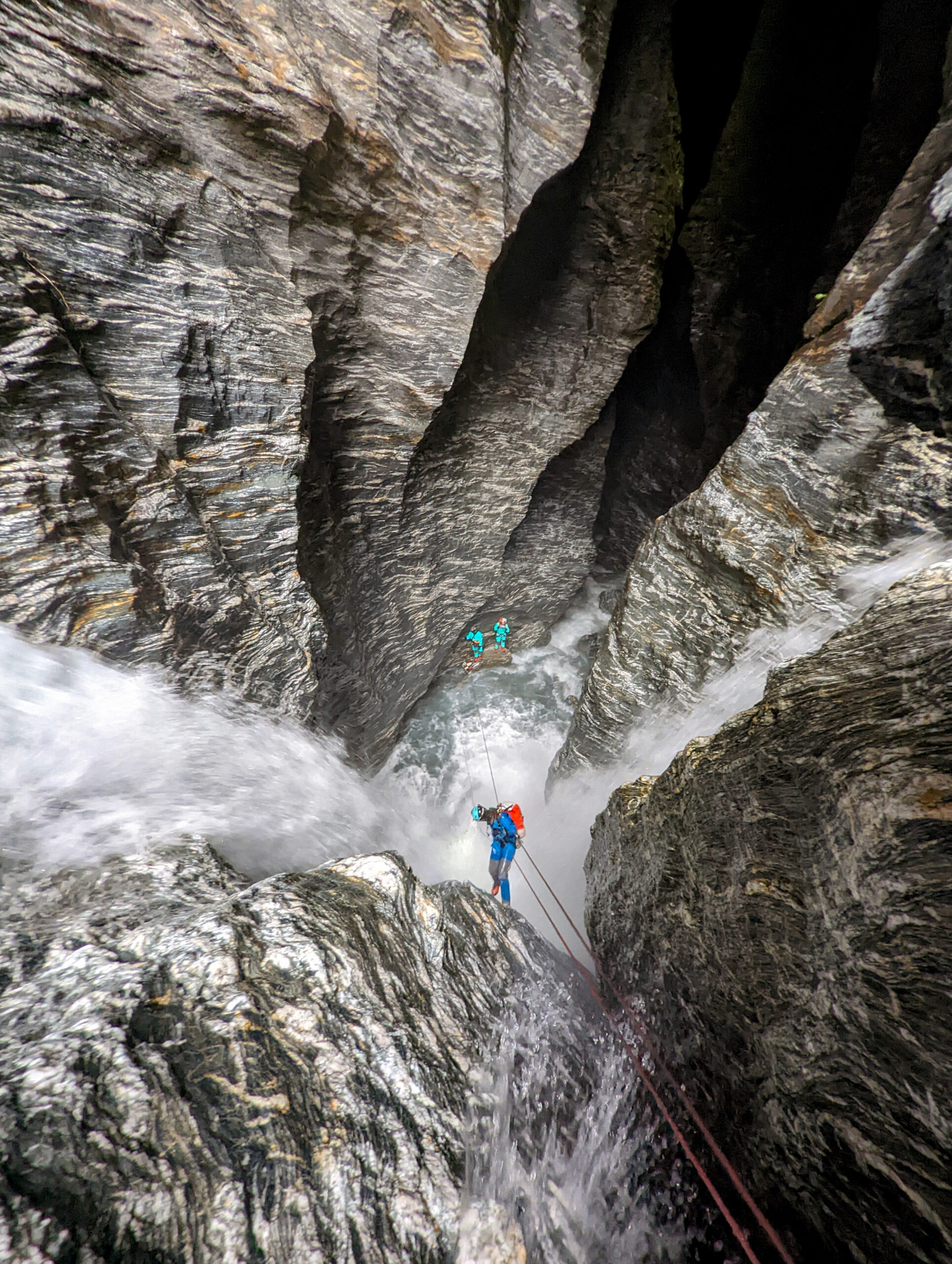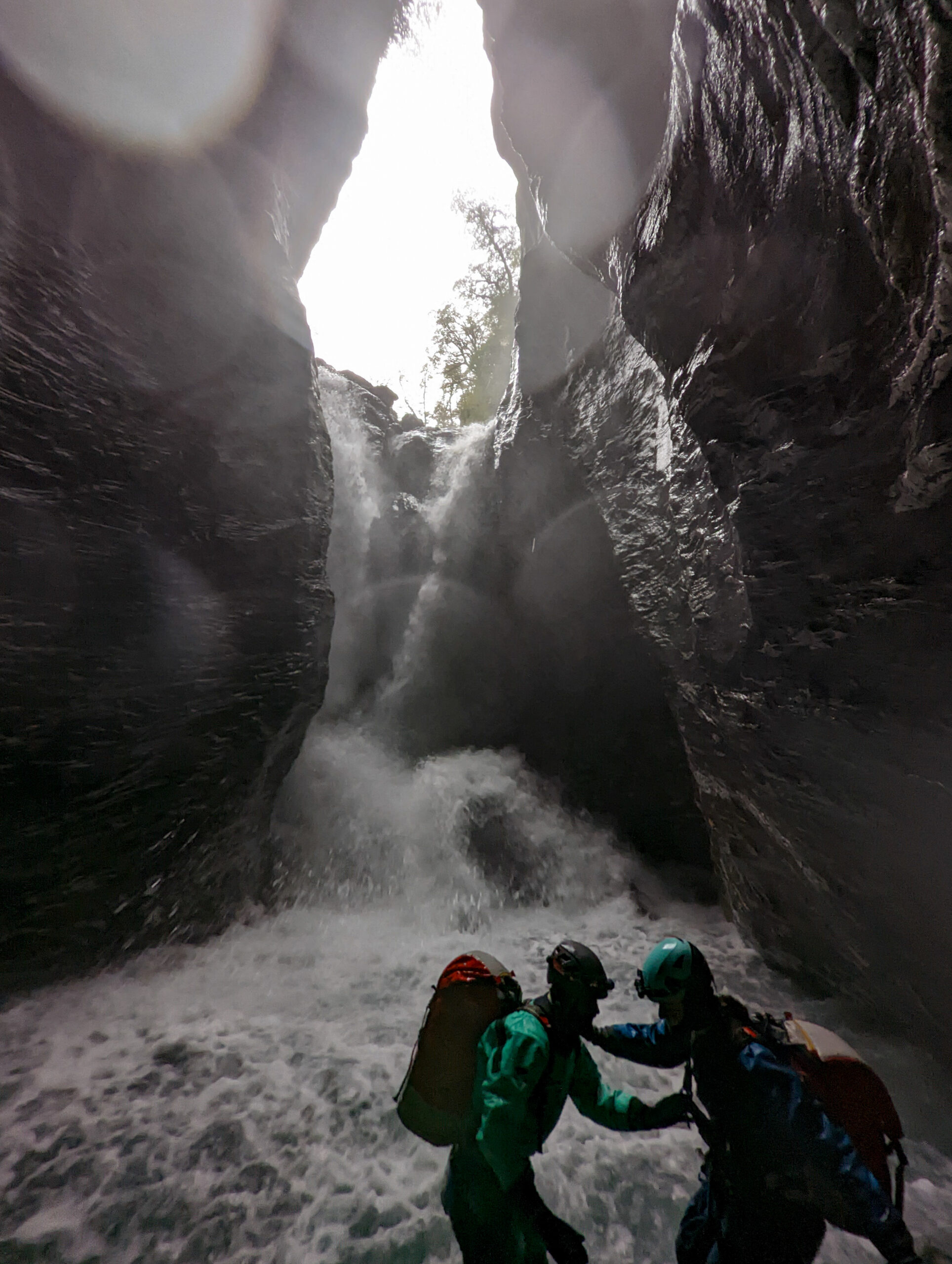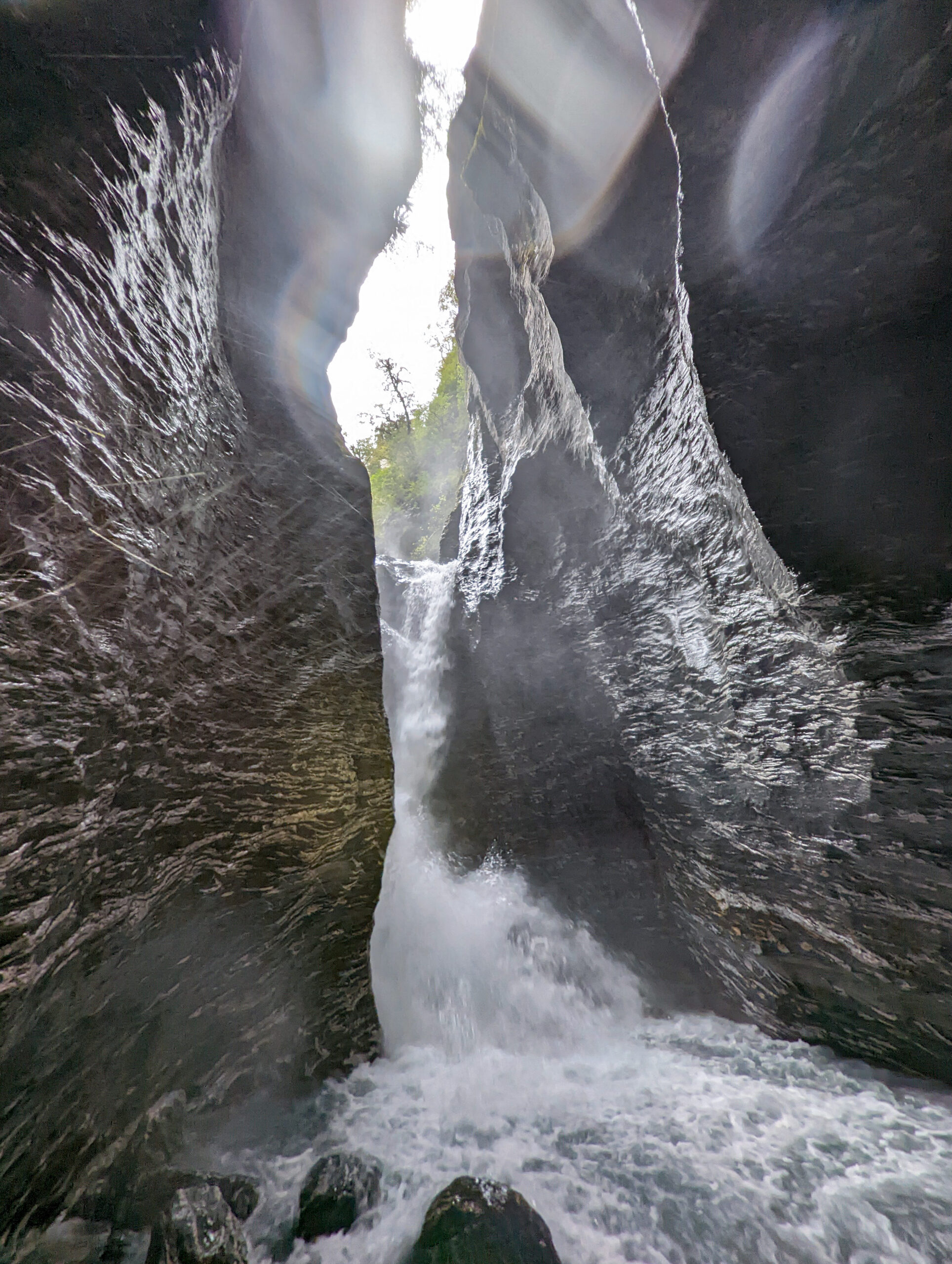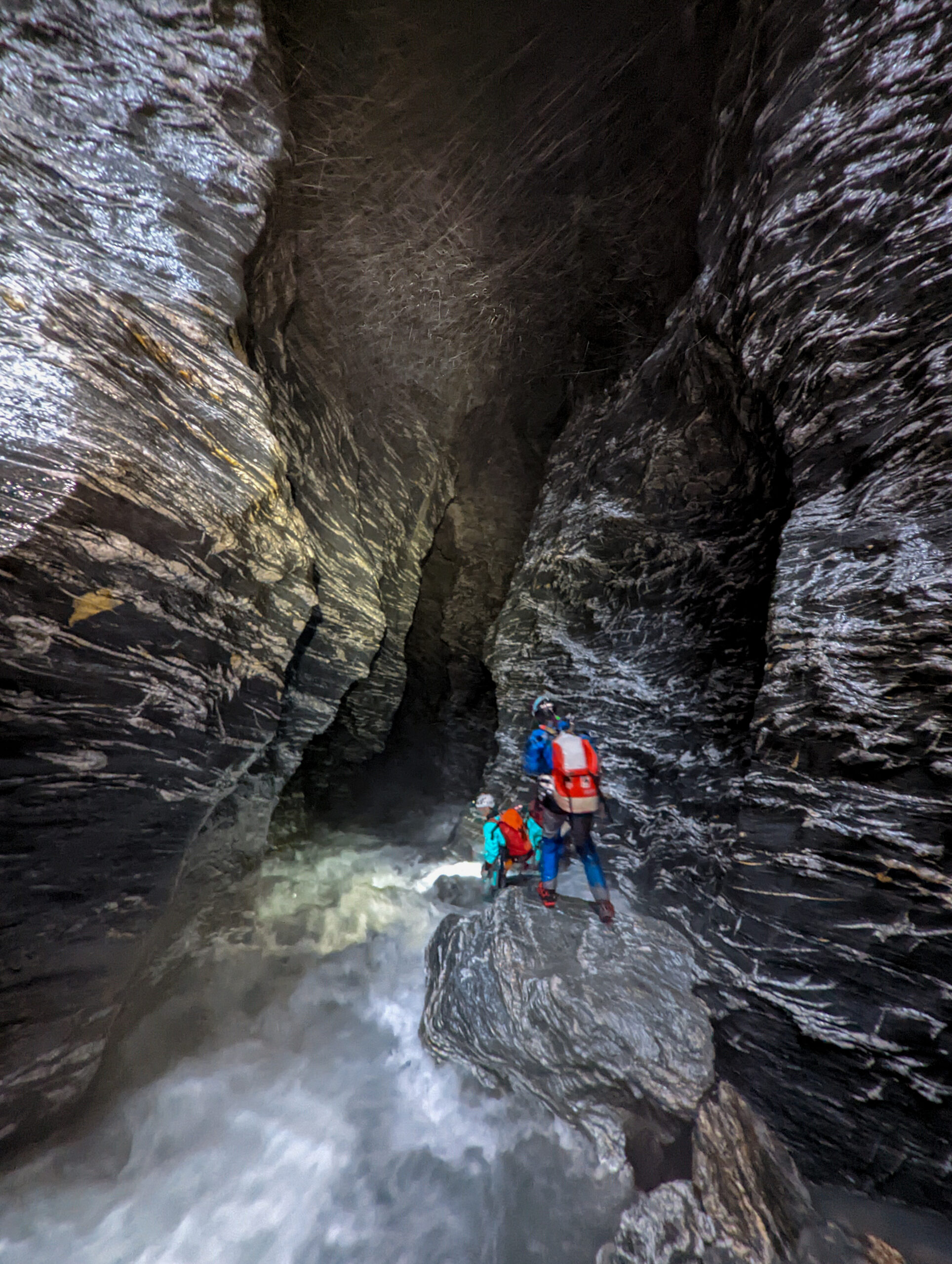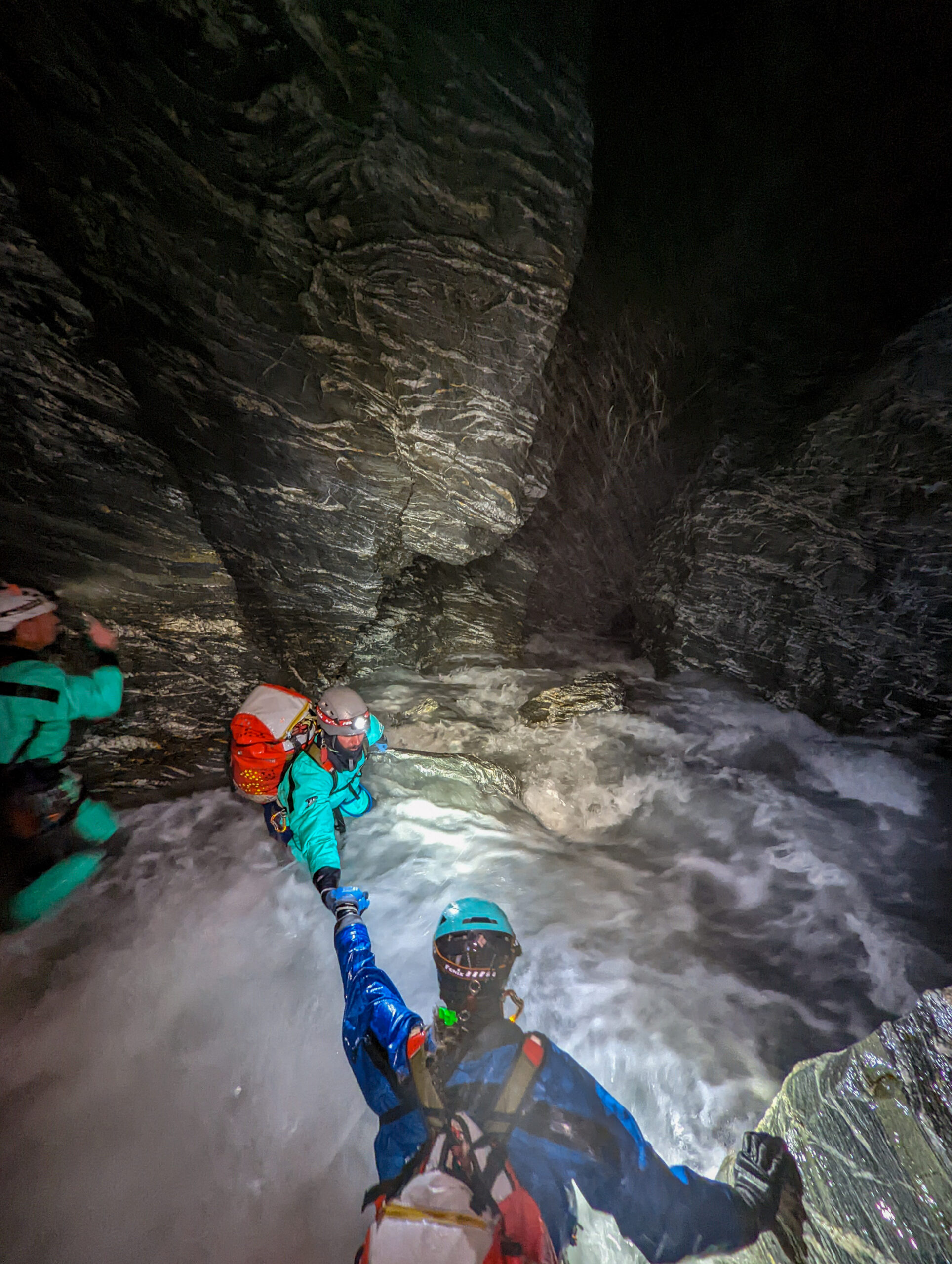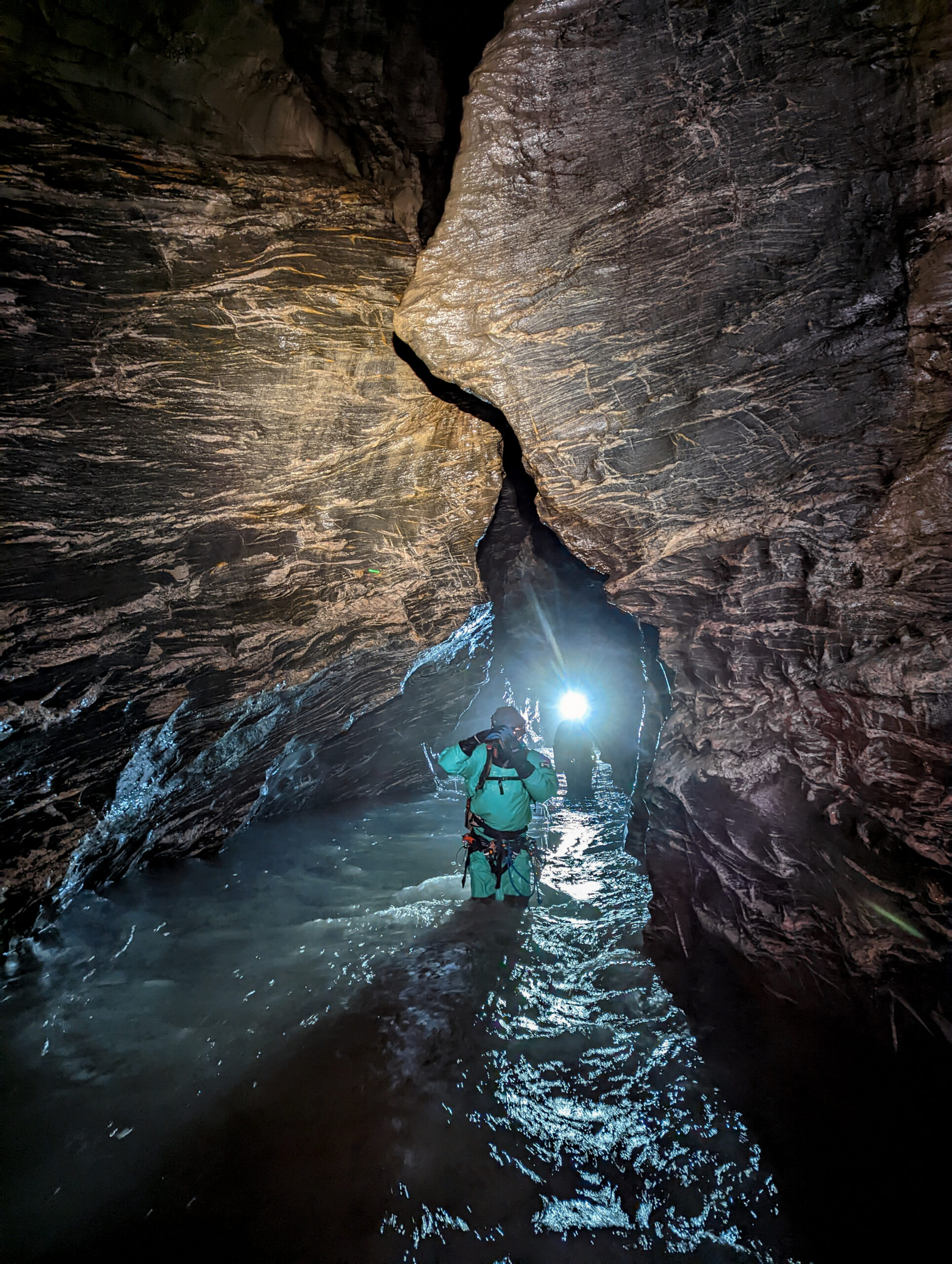





More like a cave than a canyon, Margaret Burn is one of the most spectacular, narrow, deep, committing and high-flow canyons in New Zealand.
Multiple days are required to approach to the base camp, scout, descend and then return from this canyon.
It is an extremely serious undertaking. Glacier canyons require very specific skill sets, equipment and timing for a successful descent, which are very different from the normal gear, skills and strategies for regular canyons.
We would not recommend anyone descend this canyon unless they have prior Glacier canyon experience.
First descent: Integral (upper, middle and lower): Leo Garnache, Madie Garnache, Jason Brand. March 2026
Lower Margaret Burn v5a5III*** was first descended in March 2024 by Léo Garnache, Madie Garnache, Leo Tregret, Reto Bubendorf
A note on water levels
Reference pictures are included in the Lower Margaret Burn v5a5III*** topo.
The first descent team did the canyon when the flow of the Dart River at Hillocks gauge was between 48 and 52 cumecs.
Glacier canyons
Margaret Burn and Gloomy Gorge are probably the only two true ‘glacier canyons’ that have been descended in New Zealand to date. Many of our top canyons show evidence of past glaciation, and a few have small <1km sq glaciers/snowfields in the headwaters.
However, a true ‘Glacier canyon’ has a significant (>2km sq) glacier, which means the waters are almost always milky with glacial silt, and canyon is still in the rapid erosion phase.
Time of year and time of day – because warm/sunny conditions increase snow melt and increase flows, glacier canyons are done when it’s cold. That means generally in Autumn, before it snows in the catchment,
Also, they are often done very early in the day, or even at night.. The flow in most glacier canyons increases during the day’s warming. The glacier size, solar aspect and air temperature determines when the flow peaks – which can be from mid-morning through to late at night.
The cold – glacial melt, autumn season and dark interior require drysuits and experience in extra-cold conditions. Stoves, chemical heat packs etc may be used.
The dark – when the geology promotes canyon formation instead of a wide choss-pile valley, glaciers cut down rapidly – making very narrow and deep canyons. These mean good head torches, spare batteries, backup lights and caving experience. Long tunnels and cave sections are not uncommon.
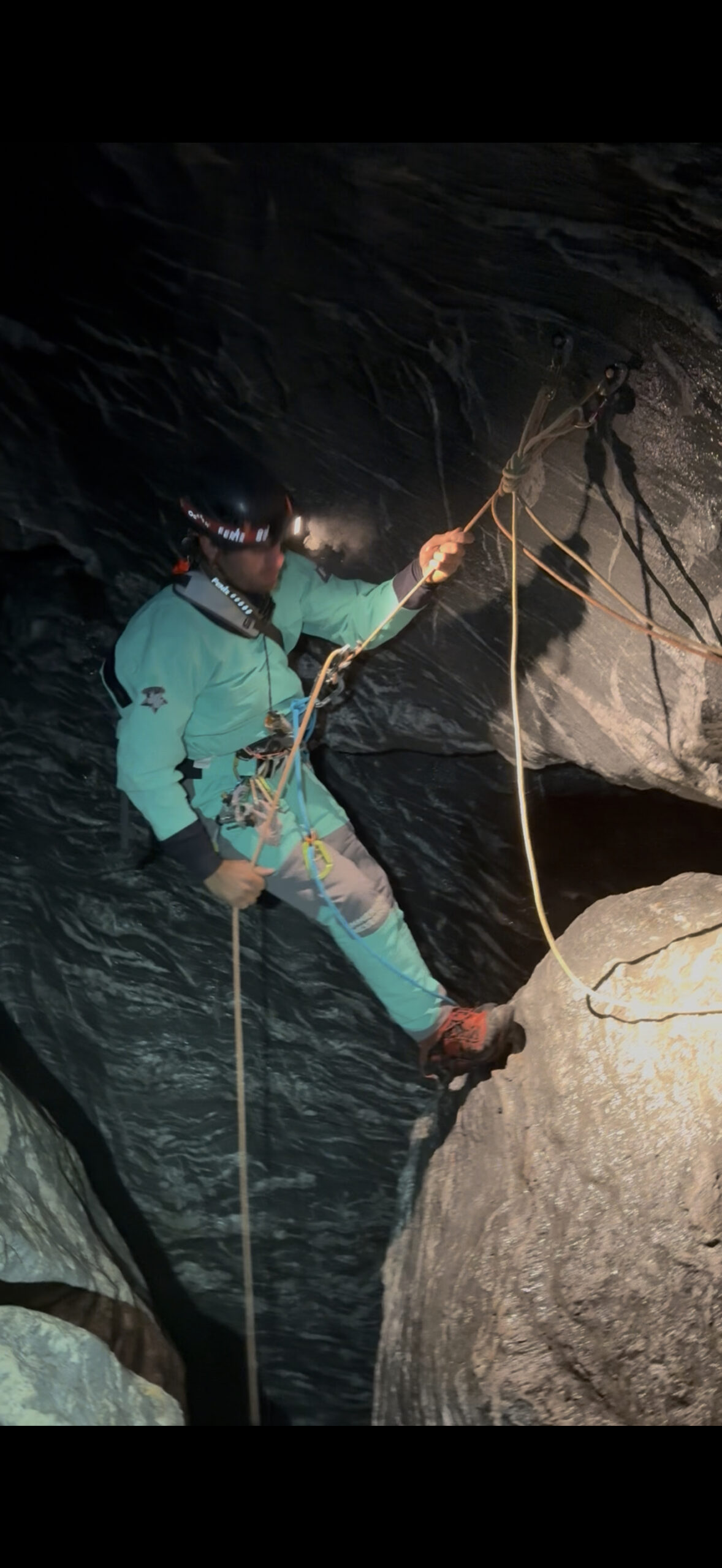
Caving rope techniques. Due to the high flows, narrow situations, strange route finding around boulders and hazards, progression on rope looks more like modern caving rope techniques than standard canyoning technique. Going up, down, across, transitions, rebelays, deviations, pendulums are common.
Longevity of anchors – the narrow canyon and super high spring melt flows mean that it is very difficult to place anchors that survive from season to season. Re-bolting is common, as is the use of v-thread anchors.
Committment – the technicality, depth, high flows, cold conditions, darkness and roof means that organised rescue would be extremely problematic or completely impossible.